When the adults in a kid’s life work together, the lesson lands the first time. When they don’t, the kid learns something else entirely — that accountability is negotiable, as long as you find the right adult to tell your version to first.
I learned that the hard way, over four miles a day, for two days, with a banana peel at the center of it.
Part One of “Lessons We Learned the Hard Way.”
The Universal Truth of My Childhood
I grew up knowing one universal truth: the teacher — or the principal — was always right.
There was no point in going home and presenting my side of the story. My parents had a pretty dependable routine.
Step one: Tell me to toughen up.
Step two: Double whatever punishment I had already received at school.
If I got detention, I probably had work waiting for me at home. If I lost recess, I might also lose television. And if the principal called, my parents didn’t begin by asking what the school had done wrong.
They asked what I had done.
Consequently, I learned that telling the truth was usually the best option.
Unfortunately, I also learned that when the truth looked particularly painful, it was worth exploring a few creative alternatives first.
Let’s Test the Arm
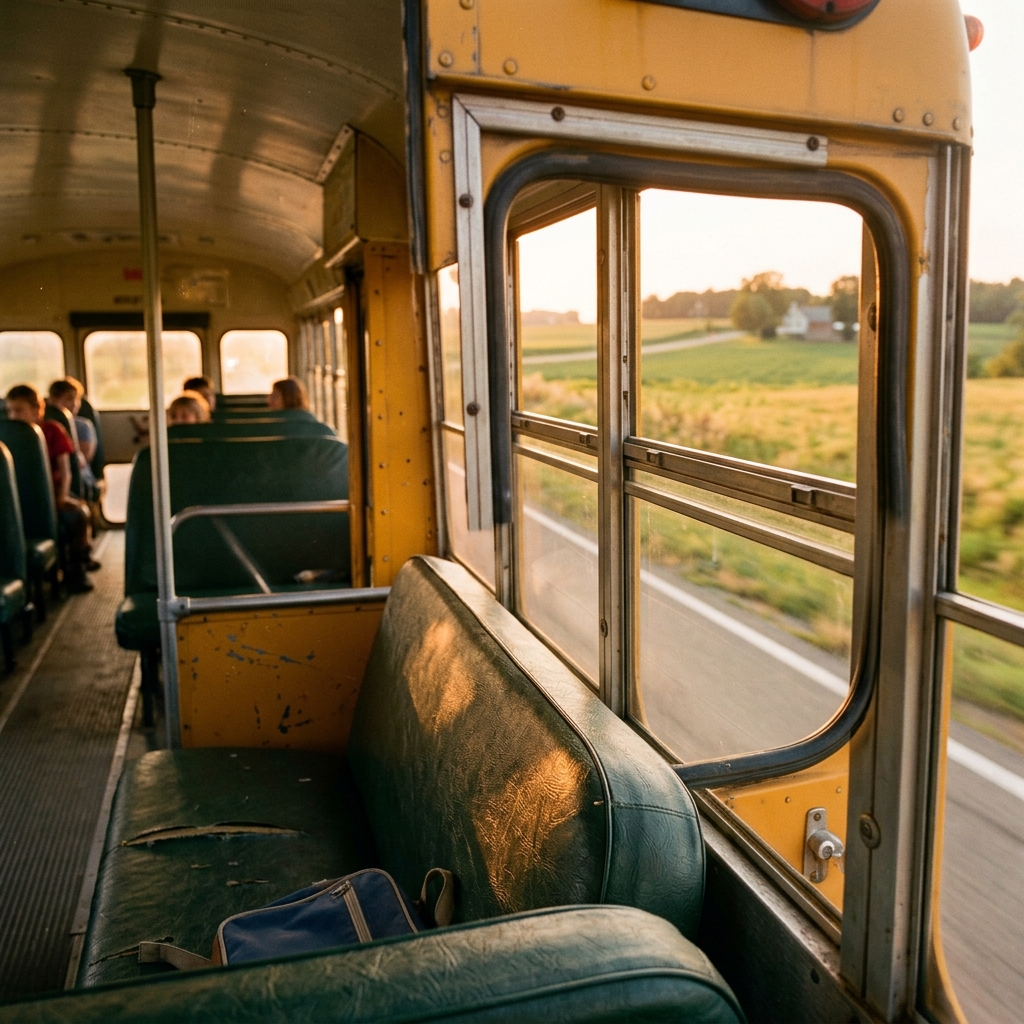
One afternoon, I was riding the bus home when several kids got off at the first stop. As the bus started pulling away, I spotted one of them walking alongside the road.
For reasons I still cannot fully explain, I reached into my lunchbox and discovered a banana peel.
Most sensible people would have left it there.
I looked at it and thought, Let’s test the arm.
I rolled down the window, took aim, and launched it.
The peel sailed through the air and hit him squarely in the back of the head.
It may have been the best throw of my young life.
For approximately eight seconds, I was a legend.
Then the bus driver looked in the mirror.
My legendary status ended quickly. I was kicked off the bus for two days.
The Plan
The sensible response would have been to go home, tell my parents what happened, accept the additional punishment, and move on.
Instead, I developed a plan.
I would simply walk the two miles to school for two days and pretend nothing had happened. My parents would never know.
My best friend Jeff lived next door, and because true friendship occasionally means supporting terrible ideas, he agreed to walk with me.
Two miles to school. Two miles home. Two days.
We could handle it.
The first day went according to plan. We walked to school, returned home at the normal time, and nobody asked any questions.
I began to think I might be some kind of criminal mastermind.
The Discovery on the Ditch Bank
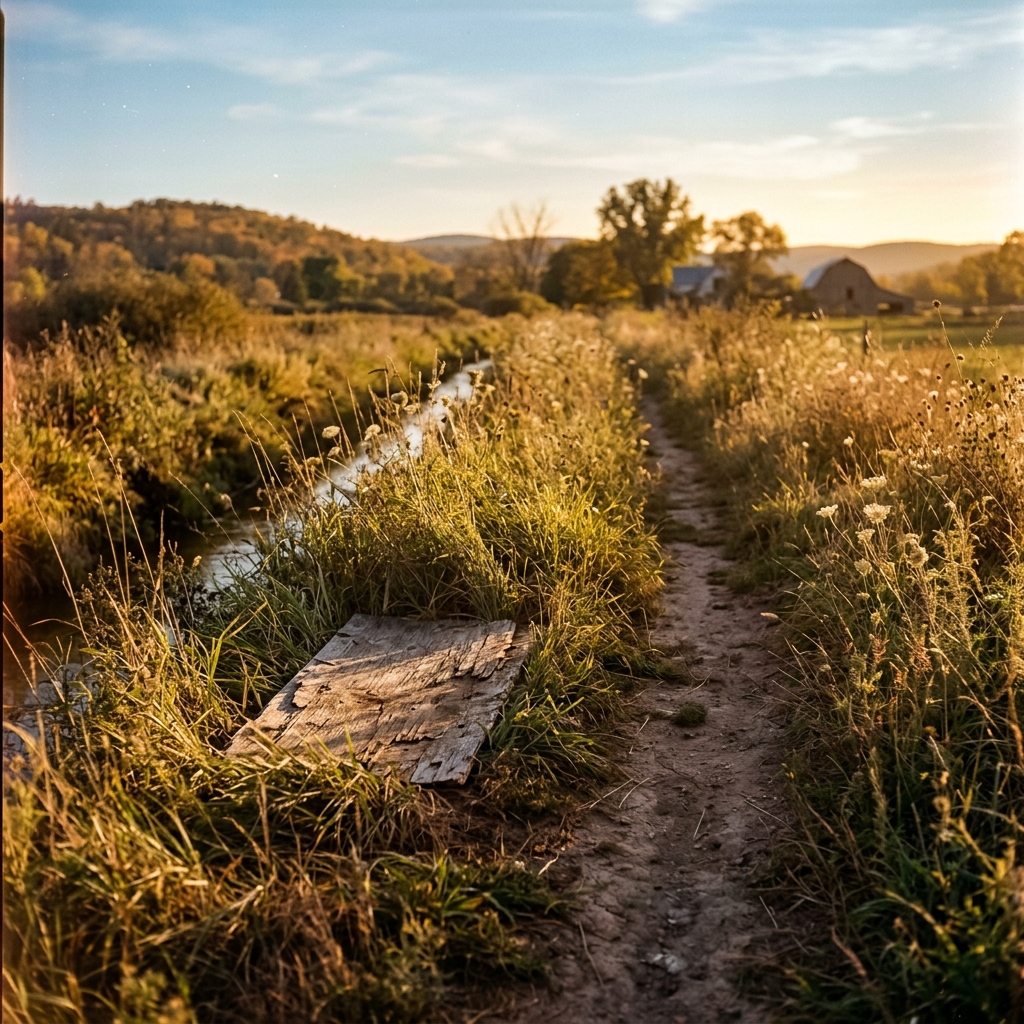
On the second day, Jeff and I decided to take a shortcut along a ditch bank.
Somewhere along the way, we discovered two or three magazines hidden underneath a weathered piece of plywood. The kind of magazines no ten-year-old was supposed to be anywhere near.
To a couple of young boys, it looked like an archaeological discovery.
Suddenly, our punishment walk had become a pilgrimage.
Word spread faster than any important information ever traveled at school. By the following morning, we had four or five additional “walking buddies.” These were kids who had absolutely no transportation problems but had developed a passionate new commitment to morning exercise.
Our quiet two-person cover-up was beginning to resemble a field trip.
The Phone Call I Forgot to Plan For
Unfortunately, while I had been busy organizing educational detours along the ditch bank, the principal had called my mother.
He wanted to know why I wasn’t riding the bus.
That led to one of the most uncomfortable question-and-answer sessions of my childhood.
I tried explaining that I had decided I needed more exercise.
My mother looked at me the way only a mother can look at a child who is presenting an obvious lie as though it were sworn testimony.
She didn’t buy it.
Before long, the entire story came out: the banana peel, the suspension, the two-mile walk, and probably more information about our shortcut than I had planned to provide.
I was back on the bus the next day.
I also spent every afternoon that week weeding the flower beds.
What My Parents Didn’t Do
My parents didn’t call the school to argue that the punishment was unfair.
They didn’t explain that I was normally a good kid.
They didn’t question whether the bus driver had properly considered the emotional circumstances surrounding my banana-peel decision.
They let the school consequence stand.
Then they added their own.
Today, we sometimes treat consequences as though they damage children. We worry that disappointment will hurt their confidence, or that punishment will make them feel badly about themselves.
But feeling badly about a bad decision is not always harmful.
Sometimes it is the lesson.
The Part That Actually Stuck
I learned that choices follow us home.
I learned that avoiding a small consequence usually creates a larger one.
Most importantly, I learned that the adults in my life were working together. I couldn’t escape accountability by finding whichever adult was most likely to believe my version of events.
That last one is the one that matters now.
Every kid runs the same experiment eventually. They tell one version at school and a softer version at home, and then they watch to see whether the two adults compare notes. What they find out in that moment shapes how honest they bother to be for years.
I don’t remember feeling unloved or misunderstood.
I remember pulling weeds.
And I never threw another banana peel out of a bus window.
Sometimes honesty really is the best policy — especially before your cover-up develops a treasure map, a ditch-bank detour, and five additional witnesses.
This week, try this: the next time your child comes home with a consequence from school, ask what they did before you ask what the school did. Then, if the consequence was fair, let it stand and add nothing but a conversation. You are not deciding one punishment. You are showing them whether the adults in their life are on the same side of the table.
This story first appeared on Matt’s Substack. Read the original post — “The Two-Mile Cover-Up” — and subscribe to the newsletter for short stories and practical lessons like this one every week.